I have been to the theatre only 16 times in my life, and when I went to see that movie, I was twenty-two, and on number 11. I had been incredibly austere back then, and the four years of literal asceticism during Engineering had still not worn off. I knew no one was going to make movies the kind I had begun to love. There wasn’t a Bandini coming anytime soon, no melody that would wrench my heart out of its four-walled chamber like Gulzar’s first, virgin verses. And of course when I went to see this movie, I had not expected that. And of course it was not quite anything like that. And that’s the reason I am still searching for an answer–how I had already surrendered myself to a movie, even before the first frame revealed itself. How the carefully accumulated logic of 4 years dissipated in the air as soon as the ethereal and yet absolutely earthy notes of ‘Mor Bani Thangat Kare’ hit my ears.
I still remember 2013 rather vividly. A bunch of trainees going for Race 2. Songs from Aashiqui 2 playing on loop everywhere. ‘Yeh Jawaani Hai Deewani’, ‘Chennai Express’, ‘Krrish 3’ and ‘Dhoom 3’- all these being watched by everyone I knew. And me, just another ordinary Assistant System Engineer – Trainee, turning my nose up in the air and dismissing everything with my ‘holier-than-thou’ attitude, someone in whose presence a housemate would switch from ‘f***’ to ‘fish!’. And then the same woman put to such a trance that she sat through the crude language, the rather raunchy numbers, and plentiful violence – how do you explain any of that? And I just did not sit through it, I loved every still, every fragment of sound, every hue. I did not relate to any of it; I do not understand love of that kind that happens with a swift glance and then overpowers reason and erodes identity. And yet, I was watching with nothing but love and wonder; not for the actors or even the story, but the experience. In love, yet not quite. I think there was a lot of joy, and not just when it was obviously happening. Nothing about the movie felt sad to me, not even when Ram and Leela died. It would have been easy to say that it was just the entertainment of it, but boldness and raunchiness had not been my type, and I doubt if at twenty-two, I was having a coming-of-age with this unrealistic movie.
And so, it remains the only movie with which I struggle so much. The more I try to rationalize, the deeper I sink. I have issues with it, and yet I love it with a magnitude that almost hurts—even after thirteen years.
How do you craft an experience that breaks through every layer of defence?
Rationalization aside, there is so much that evokes a hundred questions in me, not just as a viewer but as an engineer who wants to write. Is the end result simply to be seduced by the gorgeousness, the aesthetics, the perfectly synchronized choreography, the electrifying chemistry—and forget our meticulously planned world for a while, where every emotion needs to be measured against the allowed bandwidth, and just give in, unquestioningly, for two hours and thirty-five minutes? Are we having just a brief, albeit intense tryst, and not making love with our souls?
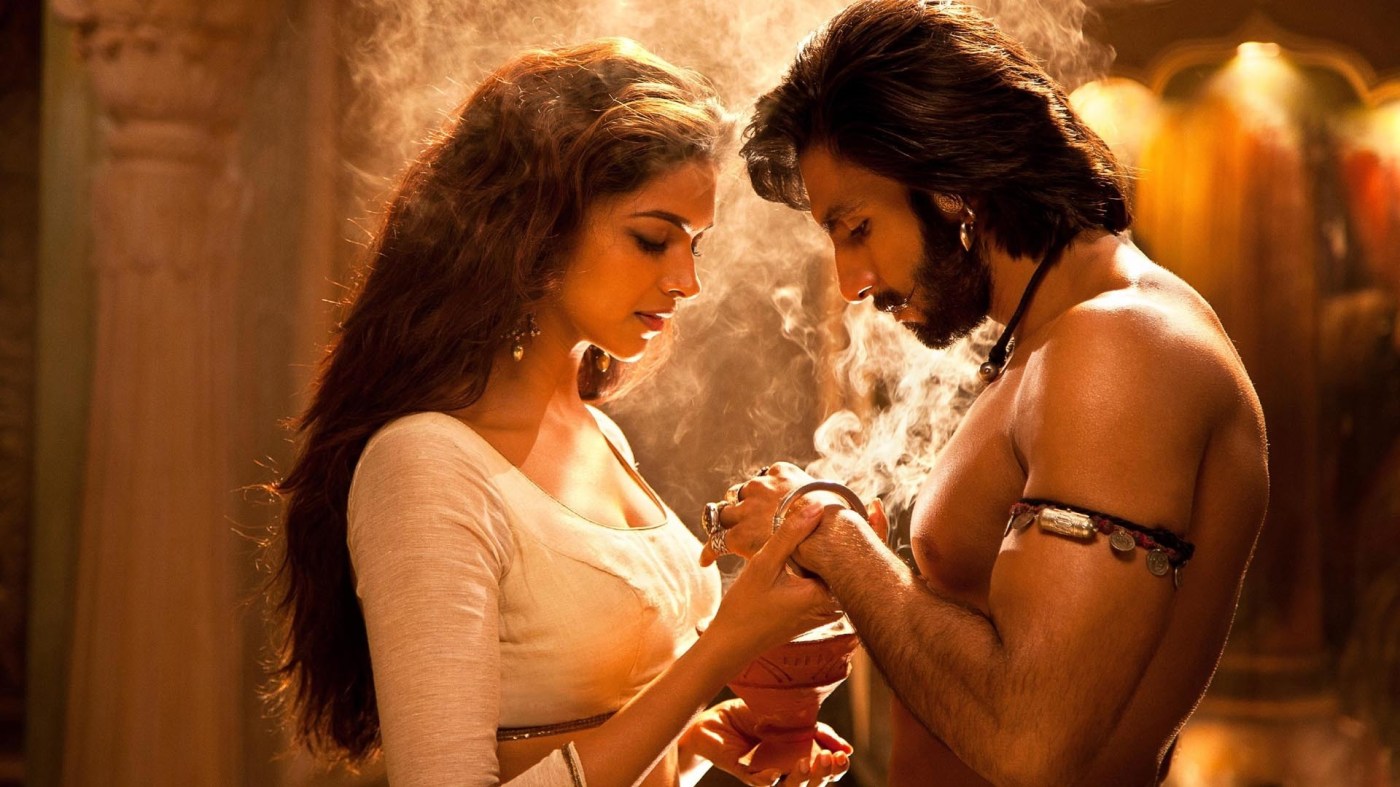
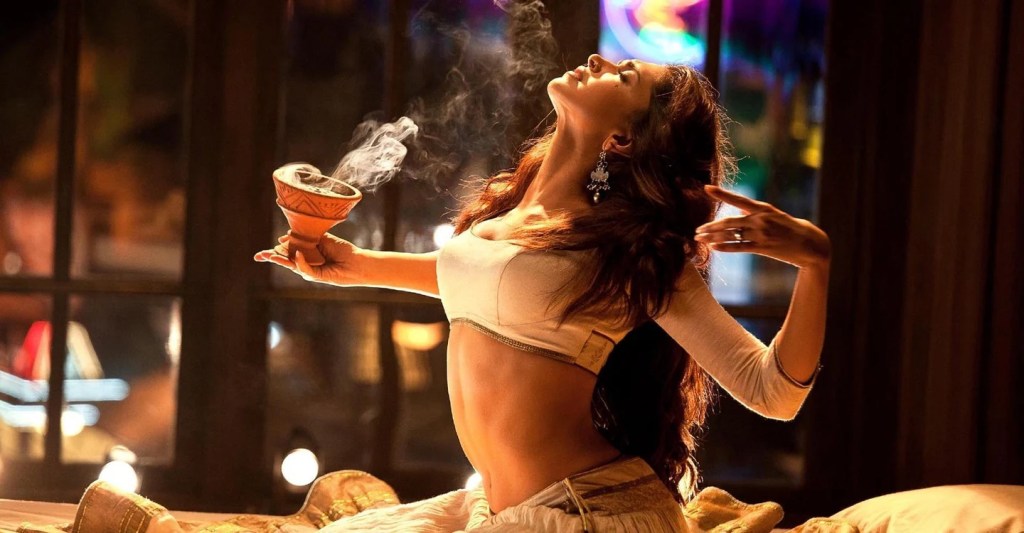
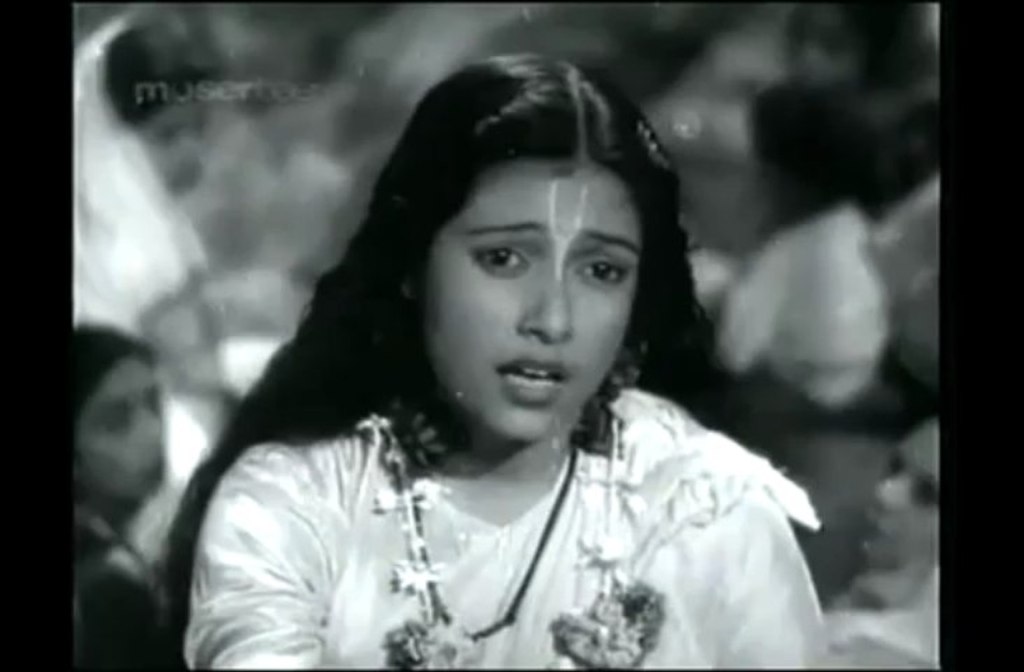
Is an ‘Ang Laga De Re’ just a sensuous song of plain visceral longing or should we inhale the purifying swirl of the smoke rising from the dhuni as well and think for a moment about its lyrical foil from Pyaasa—‘Aaj Sajan Mohe Ang Laga Lo’? What is it really that the director and the writer want us to feel?
I didn’t analyze any of this back then, at least consciously. But hearing the songs in sequence today, it feels different. What starts from pure lust, pure visceral action finds its way to virah, with the temple bells chiming in the background as ‘Laal Ishq’ starts, to the devotion as Leela touches Ram’s feet in ‘Nagada Sang Dhol Baje’, and becomes the dissolution of self and the final sacrifice – one comes full circle with the spiritual journey of a human being. We have to go through all these stages – lust, anger, longing, separation, devotion, sacrifice, duty—if we want the final union: salvation.
Asceticism is of no value if one did not attain it overcoming the pangs of passion and desire.
Kaam. Virah. Bhakti. Tyaag. Mukti.
It is perhaps delving deeper than what is necessary or even intended, and I must admit I have my days when dancing to one of the many iconic tracks is just dance and fun. But then I have days when I sit, ponder, and wonder. And it becomes personal, too. I have always wanted to write a great book, but I have also wanted to be read. So, I really want to know how one maintains the purity of one’s thought while not letting one’s work dissolve unseen.
In my case, it is still easy. I have the luxury of tearing apart every word I once chose with great care in private—losing nothing more than my own time. But when one has real-world constraints to translate a dream to celluloid, it is not the same. I wonder how much care must have been taken to have hundreds, maybe thousands of actors perform in tandem, having the props at the right place; even the precisely suspended haze rising from the dhuni—while preserving the emotion for which all these form the backdrop.
The budget, the weather, the politics, and the fluid reality of art.
Demolishing your own vision, wiping your colors, redoing the formations, and breaking and making your tunes until it feels just right. But how do you know what is right? And right for whom? You or the audience—or both?
So many questions. But I think this is how it is meant to be—an experience to be lived without asking the why or how. A commercial ride for those who are in for the song, dance, and spectacle, and something ancient, wild, and mystical—that cuts deep into the most cynical of hearts with the first notes of ‘Mor Bani Thangat Kare’.
 Hermit in Red Lipstick
Leave a comment