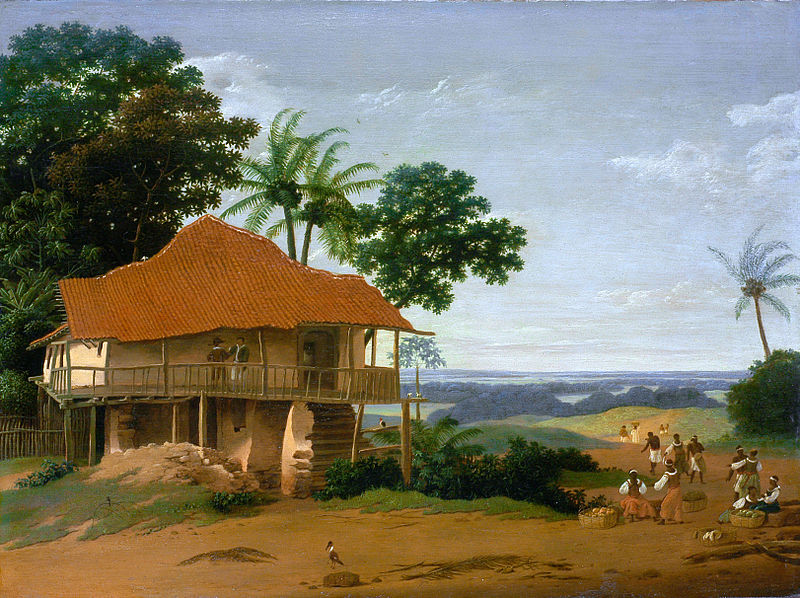
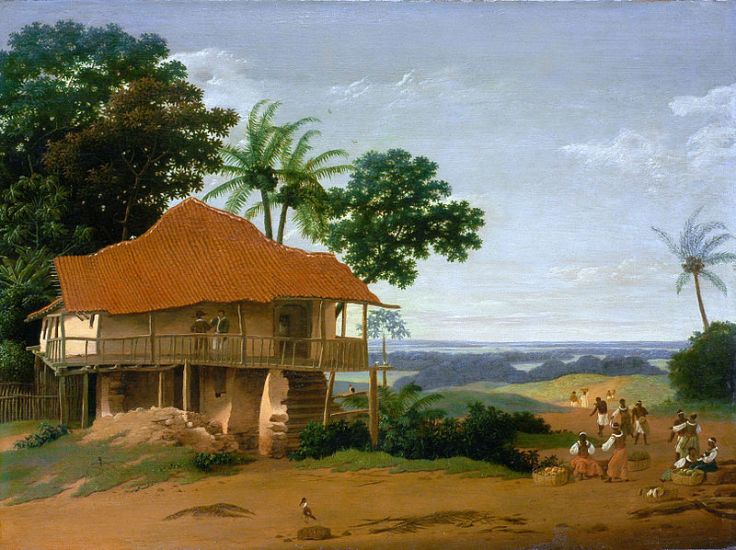
I never felt the need to know how thistle differed from mauve or what gave scarlet and crimson their distinct identities; to me they remained labels marked on the little tubes of water colors. It was the final shade that mattered. It was what that made the picture what it was. I went about mixing colors on a broken palette that once belonged to my grandmum and then on a little plate from the kitchen. I looked at the water, fascinated, at how the tinge changed till it was dark enough, when it finally refused any more color to be washed in. Sometimes it looked like wine; I’d never seen wine, to be honest, but that looked like the wine on television. I imagined the colorful water in my kitchen-set cup, raised in panache the way they did in movies. It might seem long but I only thought about this for few seconds because I needed to finish my painting first. I was drawing a landscape. Why, I never drew anything but landscapes. Many of my friends drew Mickey Mouses and Donald Ducks. Even grandpa. But I stuck to landscapes. Mountains with a river flowing out and trees that might never have been there, geographically speaking. And the Sun peeking from the mountain. When I had been younger, I’d draw a hut too, with a fence and a path that could be mistaken for a river; you had to color that with something other than a blue so that it looked like a path and not a river. I remember the teacher pull a boy’s ears for coloring that path blue. “How can a river lead to a door? Have some sense.” Upper Kindergarten, it was. My family laughed when I narrated them this incident. “Poor boy”, they said, “Probably his parents do not give him sufficient time”. But why could not a body of water lead to your door? Something of that sort happened in those architectural marvels, isn’t it? I later learnt that there could be swimming pools on terrace. Whosoever had thought about that? But that existed, whether we were ready to believe or not. So are we allowed to draw things that only others believe in? Why could my leaves not be pink? Why should a house not float on an ocean?
I once drew a funny figure that my own heart refused to consider as art. But my grandmum said encouragingly, ” Why, it looks like Picasso!” “You can draw anything you like at home, but you must draw things at school that your teacher likes and understands”, said mum. I did not want to be humiliated like that boy in that class, so I heeded to that. Later on, I discovered purple-pink leaves, both in the garden and in paintings. I saw indigo, red, orange skies in real, and blue green and even fluorescent skies in pictures. “That is Aurora Borealis, it happens in places that are in the high latitude regions. A lovely sight they are.” With time I learnt that there were certain liberties that one could take with colors. There was a painting in which the artist used violet, pink, red and orange to show facets of night in a landscape. Another had a sky with all shades that I had in my watercolor set. And then there were paintings that made no sense to me. Geometric shapes, psychedelic figures, and those cubist things. I was once sent to an interschool drawing competition where I let my imagination run wild and made some geometrical designs out of my mind. My mum was allowed to see my drawing, and I was happy with the fact that she liked it. But my drawing teacher didn’t, who happened to be among the judges. “I felt ashamed. I was expecting to see some good drawing from you”, she said and then added, “I hope you’ll do better next time.” I learnt a lesson. Even something that apparently made no sense had to make some sort of sense, when somebody looked at it. Art had to be relatable and understandable. And we did not do modern art then, so even though we finally had some sort of freedom with our canvas, we could not be outright rebels in our conception and execution. I remember the teacher praising a girl who had made nice roses, after which I learnt to make similar or perhaps even nicer roses. On top of that, I wrote a poem over it, with the painting bolstering the words thematically. The teacher was happy. My family felt proud looking at those neat, resplendent roses and that poem. I stopped drawing after class 8. Well, we didn’t have drawing in class 9. And it takes some sort of idiocy to have it in class 10; that’s a really serious year.
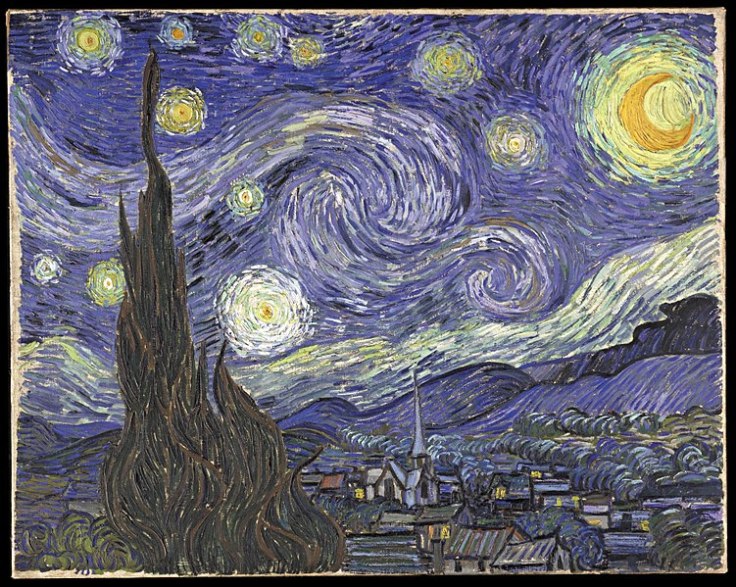
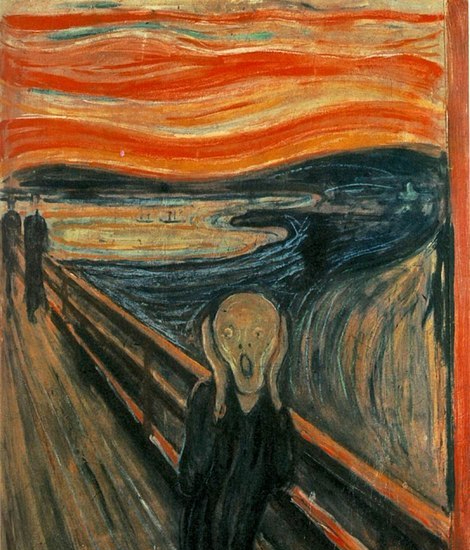
I do not know whether my teacher knew about Art Nouveau, whether she liked impressionists or whether Van Gogh’s ‘The Starry Night’ attempted by 10-11 year olds, appealed to her aesthetic sense, and I know for sure that I would not get a ‘C’ if I tried something like ‘The Scream’.
But it’s not about that teacher. Everybody I knew had a sort of similar idea about art. “That’s fine arts”, my grandmother chirped, “I think your teacher probably expects something from that realm”. “Go according to your syllabus, everything will be covered but for now focus on the current aspects”, somebody advised. But we never studied art beyond that, so we could never understand and learn those aspects. We were literally not allowed to go beyond a line. But that sort of thing happens in our life too, doesn’t it? You do a lot of things, actually most of the things that others want you to. That seems to be the best way to find acceptance. It’s tried and tested. And then that idea rubs onto you too. A certain type of thing is beautiful to you, you refuse deviations. You become that teacher who punishes 4 year olds for drawing rivers that lead to doorways. You forget a world where leaves can be pink, where structures rise from oceans, and where the Sun is not yellow.
I never felt the need to know how thistle differed from mauve or what gave scarlet and crimson their distinct identities; to me they remained labels marked on the little tubes of water colors. It was the final shade that mattered. It was what that made the picture what it was. I went about mixing colors on a broken palette that once belonged to my grandmum and then on a little plate from the kitchen. I looked at the water, fascinated, at how the tinge changed till it was dark enough, when it finally refused any more color to be washed in. Sometimes it looked like wine; I’d never seen wine, to be honest, but that looked like the wine on television. I imagined the colorful water in my kitchen-set cup, raised in panache the way they did in movies. It might seem long but I only thought about this for few seconds because I needed to finish my painting first. I was drawing a landscape. Why, I never drew anything but landscapes. Many of my friends drew Mickey Mouses and Donald Ducks. Even grandpa. But I stuck to landscapes. Mountains with a river flowing out and trees that might never have been there, geographically speaking. And the Sun peeking from the mountain. When I had been younger, I’d draw a hut too, with a fence and a path that could be mistaken for a river; you had to color that with something other than a blue so that it looked like a path and not a river. I remember the teacher pull a boy’s ears for coloring that path blue. “How can a river lead to a door? Have some sense.” Upper Kindergarten, it was. My family laughed when I narrated them this incident. “Poor boy”, they said, “Probably his parents do not give him sufficient time”. But why could not a body of water lead to your door? Something of that sort happened in those architectural marvels, isn’t it? I later learnt that there could be swimming pools on terrace. Whosoever had thought about that? But that existed, whether we were ready to believe or not. So are we allowed to draw things that only others believe in? Why could my leaves not be pink? Why should a house not float on an ocean?
I once drew a funny figure that my own heart refused to consider as art. But my grandmum said encouragingly, ” Why, it looks like Picasso!” “You can draw anything you like at home, but you must draw things at school that your teacher likes and understands”, said mum. I did not want to be humiliated like that boy in that class, so I heeded to that. Later on, I discovered purple-pink leaves, both in the garden and in paintings. I saw indigo, red, orange skies in real, and blue green and even fluorescent skies in pictures. “That is Aurora Borealis, it happens in places that are in the high latitude regions. A lovely sight they are.” With time I learnt that there were certain liberties that one could take with colors. There was a painting in which the artist used violet, pink, red and orange to show facets of night in a landscape. Another had a sky with all shades that I had in my watercolor set. And then there were paintings that made no sense to me. Geometric shapes, psychedelic figures, and those cubist things. I was once sent to an interschool drawing competition where I let my imagination run wild and made some geometrical designs out of my mind. My mum was allowed to see my drawing, and I was happy with the fact that she liked it. But my drawing teacher didn’t, who happened to be among the judges. “I felt ashamed. I was expecting to see some good drawing from you”, she said and then added, “I hope you’ll do better next time.” I learnt a lesson. Even something that apparently made no sense had to make some sort of sense, when somebody looked at it. Art had to be relatable and understandable. And we did not do modern art then, so even though we finally had some sort of freedom with our canvas, we could not be outright rebels in our conception and execution. I remember the teacher praising a girl who had made nice roses, after which I learnt to make similar or perhaps even nicer roses. On top of that, I wrote a poem over it, with the painting bolstering the words thematically. The teacher was happy. My family felt proud looking at those neat, resplendent roses and that poem. I stopped drawing after class 8. Well, we didn’t have drawing in class 9. And it takes some sort of idiocy to have it in class 10; that’s a really serious year.
I do not know whether my teacher knew about Art Nouveau, whether she liked impressionists or whether Van Gogh’s ‘The Starry Night’ attempted by 10-11 year olds, appealed to her aesthetic sense, and I know for sure that I would not get a ‘C’ if I tried something like ‘The Scream’.
But it’s not about that teacher. Everybody I knew had a sort of similar idea about art. “That’s fine arts”, my grandmother chirped, “I think your teacher probably expects something from that realm”. “Go according to your syllabus, everything will be covered but for now focus on the current aspects”, somebody advised. But we never studied art beyond that, so we could never understand and learn those aspects. We were literally not allowed to go beyond a line. But that sort of thing happens in our life too, doesn’t it? You do a lot of things, actually most of the things that others want you to. That seems to be the best way to find acceptance. It’s tried and tested. And then that idea rubs onto you too. A certain type of thing is beautiful to you, you refuse deviations. You become that teacher who punishes 4 year olds for drawing rivers that lead to doorways. You forget a world where leaves can be pink, where structures rise from oceans, and where the Sun is not yellow.
 Hermit in Red Lipstick
Leave a comment